Growth teams often treat pipeline problems as if they all start at the same point. They do not. Some companies need more market awareness, a broader reach, and a larger pool of interested prospects. Others already have attention and decent targeting, yet struggle to turn that interest into real conversations. That distinction matters because the wrong growth model can waste time, budget, and internal patience very quickly.
Many firms first look at sales lead generation services when they want a larger top-of-funnel. Others lean toward B2B appointment-setting companies when the immediate goal is to put qualified buyers in front of sales teams. Both approaches can work well. Both can also fail badly when used for the wrong reason. The better question is not which one sounds more impressive. It is which one fits the stage, offer, and sales motion of the business.
The Two Models Solve Different Problems
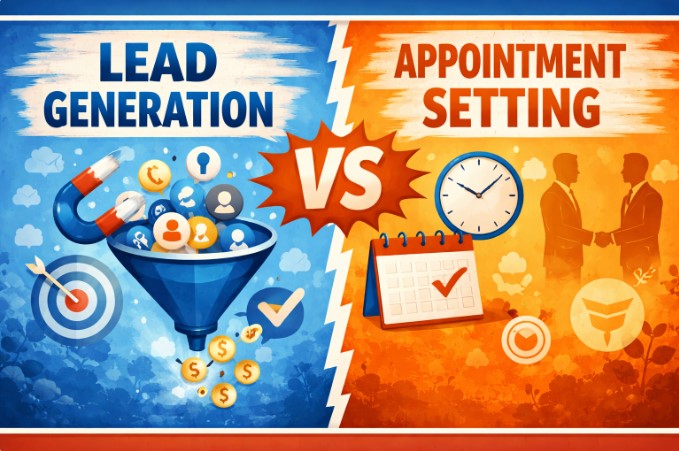
Lead generation focuses on creating interest and capturing contact information from people or companies that fit a target profile. That can happen through content, paid campaigns, outbound outreach, webinars, gated assets, SEO, events, or referral channels. The result is usually a list of prospects who have shown some level of interest, even if that interest is still early and fairly loose.
Appointment setting is narrower and more immediate. Its job is to move a prospect from a possible fit to a scheduled conversation. That usually means direct outreach, qualification, follow-up, objection handling, and calendar coordination. The result is not simply a lead in the database. The result is a live sales meeting with someone who has at least enough interest or relevance to justify the time.
This is why the two should not be treated as interchangeable. Lead generation fills the funnel. Appointment setting helps move qualified people through it. One creates volume and market reach. The other creates direct sales access. If a company confuses those roles, disappointment usually follows.
Lead Generation Works Best When the Market Needs Warming Up
Lead generation tends to work better when a company still needs to build awareness or educate buyers. If the service is complex, the sales cycle is long, or the market does not yet know the brand well, pushing for meetings too early can backfire. Prospects may download a guide, attend a webinar, or read a case study long before they are willing to take a call. In those situations, lead generation gives the business room to earn attention before asking for a commitment.
It also works well for companies selling into large markets where scale matters. If there are many possible buyers and the category already has some demand, a strong lead generation system can create a steady flow of inbound and outbound interest. Marketing can test messaging, compare channels, and learn which segments respond best before sales gets too deeply involved.
The tradeoff is quality control. More leads do not automatically mean more pipeline. Some leads will be curious but unready. Some will fit the profile but have no near-term intent. Others will download content simply because it is free. Lead generation is powerful, but only when the company has a way to sort signal from noise after the lead enters the system.
Appointment Setting Works Best When Precision Matters More Than Volume
Appointment setting tends to perform better when the target market is narrow, the average deal size is meaningful, and sales conversations need to happen with very specific people. In that kind of environment, a business may not need thousands of leads. It may need fewer well-qualified meetings with decision-makers who match the right company type, role, and level of urgency.
This is especially true in account-based sales motions. If a firm sells to mid-market finance leaders, healthcare operations teams, or IT buyers in a defined set of industries, broad lead generation can feel inefficient. A focused appointment setting strategy allows the business to approach the right people directly, qualify interest, and create real opportunities without waiting for the market to raise its hand first.
The tradeoff here is scale and dependence on execution. Appointment setting can produce faster conversations, but it is less forgiving when targeting is weak or the message is vague. If outreach lacks relevance or the offer is not compelling enough for a meeting, the whole system can stall. Appointment setting works best when the business already knows who it wants to speak to and why that conversation should happen now.
Most Companies Choose the Wrong One for the Wrong Reason
A lot of companies choose lead generation because it feels safer. They can point to website traffic, form fills, downloads, and MQL counts, even when those numbers do not turn into revenue fast enough. It creates activity, but not always traction. This often happens when leadership wants visible growth metrics, while sales actually needs stronger qualification and better access to serious buyers.
Other companies choose appointment setting because they want an immediate pipeline and do not want to wait for marketing to mature. That can work for a while, especially with a clear offer and good targeting. Still, if the market does not know the brand, if messaging is weak, or if there is no larger demand engine behind the outreach, appointment setting can become an expensive manual effort with limited long-term lift.
The deeper issue is usually diagnosis. Companies often ask, “Which service should we buy?” before asking, “What exactly is broken in our current system?” If the problem is awareness, appointment setting will feel harder than it should. If the problem is conversion into meetings, more top-of-funnel leads may only create more clutter. The right choice starts with identifying the actual bottleneck.
The Strongest Strategy Usually Connects Both
In many B2B environments, the best answer is not lead generation or appointment setting in isolation. It is a coordinated system where each plays a different role. Lead generation creates awareness, nurtures interest, and gives the brand a larger footprint in the market. Appointment setting then works from that foundation to create direct conversations with the accounts and people that matter most.
This combined model is especially useful when buyers move in stages. Some prospects need time and education before they are open to a call. Others are already close to action and only need the right outreach at the right time. A connected strategy allows the business to support both groups without forcing every prospect through the same path. When these functions work together, the sales team gets better meetings and better context. Marketing learns which themes convert into conversations. Outreach becomes warmer because the market has seen the brand before. The result is usually a healthier pipeline, not because one tactic won, but because the system stopped asking one tactic to do everything.