From the voice notes on WhatsApp to the essential documents shared on LINE, social history is preserved in communication records. Accidental deletion of these chats can result in loss of access to conversation records.
Nevertheless, some iOS recovery tools, including Dr.Fone data recovery software, offer features to retrieve social app data. This guide shows how to choose the right recovery tools to restore communication history and media files.
Part 1. Why Social App Recovery Matters More Than General File Recovery
Regarding the iOS recovery software, it’s important to know why it matters the most in terms of social apps via the listed reasons:
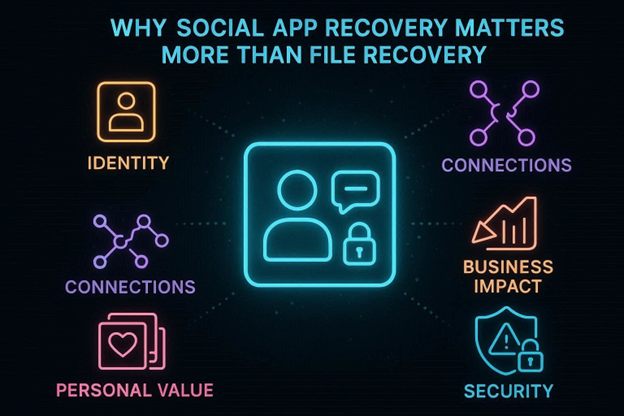
- Account and Identity: A social account represents the online persona and the digital professional brand. Thus, loss of access shuts down business pages, ad channels, and the trust built with an audience.
- Live Social Networks: Special apps can store constant chats and a list of connections, unlike other applications. So, when an account goes missing, group chats and client links disappear in a way that a simple file backup cannot replace.
- Financial and Work Impact: Many brands use these platforms to run ads and sell products. Hence, a locked profile stops sales, cuts off sponsors, and immediately affects income.
- Deep Personal Value: Most of the time, these applications hold memories, tags, and reactions from loved ones. Thus, recovery brings back the broader communication records, not just a few loose photos or videos.
- Hard Recovery Tasks: Platform rules and security locks make recovery complex. Therefore, success depends on following correct steps and using advanced tools to resolve account restrictions that basic software cannot handle.
Part 2. What iOS Recovery Software Can Recover from Social Apps?
When learning how to get back deleted WhatsApp messages on iPhone, many recovery software programs like Dr.Fone data recovery work for more than just basic texts. Such tools can scan for lost data from apps like WhatsApp, WhatsApp Business, LINE, and Viber. They can restore old files from Kik and other chat platforms across all Apple devices via the “Selective Restoration” option.
Such tools also analyze the deep memory to locate the hidden chats and media, which users can later preview and save. This means users can recover call histories, photos, and voice notes from many social services in a few steps.
Part 3. Recovering Deleted WhatsApp Messages and View Once Content on iPhone
Regarding WhatsApp recovery, deleted chats, missing media, and View Once content are common concerns for iPhone users. The right iOS recovery software can help users check whether WhatsApp data is still available on the device, in iCloud, or inside an iTunes/local backup before starting a full restore.
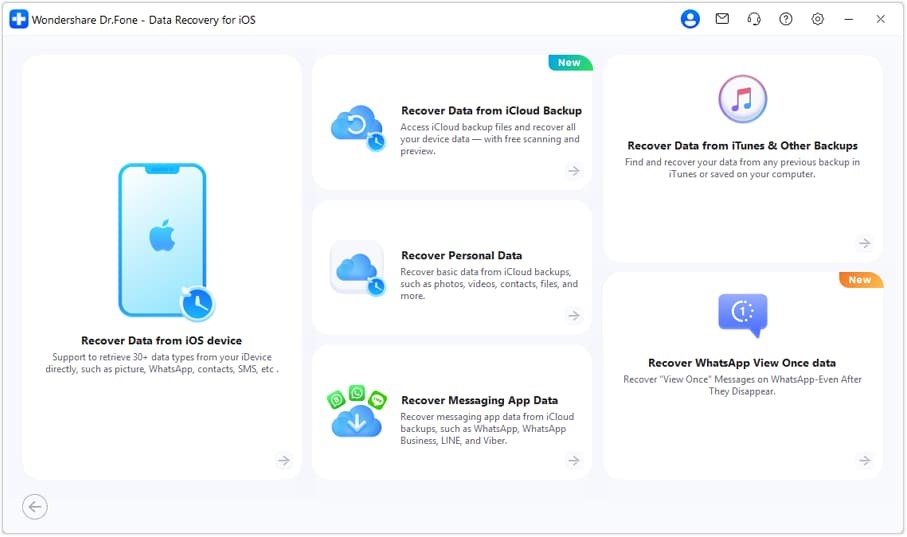
Certain tools in the market, such as Dr.Fone, support WhatsApp data recovery from multiple sources and allow users to preview recoverable data before restoring it. For users who mainly need to recover WhatsApp chats, photos, videos, documents, or attachments, a dedicated iPhone WhatsApp recovery workflow can help them choose the right source and avoid unnecessary full-device restoration.
In addition, users may recover messages deleted by a sender, chats lost during an iOS update, or media that disappeared after app issues, depending on whether the data still exists in a recoverable source. Since new phone activity may overwrite deleted data, users should begin the recovery process as soon as possible.
How to Recover Deleted WhatsApp Data on iPhone with Dr.Fone
Step 1: Stop using the iPhone immediately.
Once WhatsApp chats or media disappear, avoid sending new messages, taking photos, installing apps, or updating the device. New activity may overwrite recoverable WhatsApp data that still remains on the iPhone.
Step 2: Install and launch Dr.Fone – Data Recovery (iOS).
Open Dr.Fone on a computer and connect the iPhone or iPad with a USB cable. Keep the device connected during the recovery process to allow the software to scan the selected source properly.
Step 3: Choose the WhatsApp recovery option.
Go to the recovery module and select the WhatsApp-related recovery path. Users can choose recovery from the iPhone itself, iCloud, iTunes, or a local backup depending on where the missing WhatsApp data may still exist.
Step 4: Scan the selected data source.
Start the scan after choosing the recovery source. If the lost chats were deleted recently, direct device scanning may be useful. If the data is no longer available on the device, iCloud or iTunes/local backup recovery may provide another possible source.
Step 5: Preview WhatsApp chats and media.
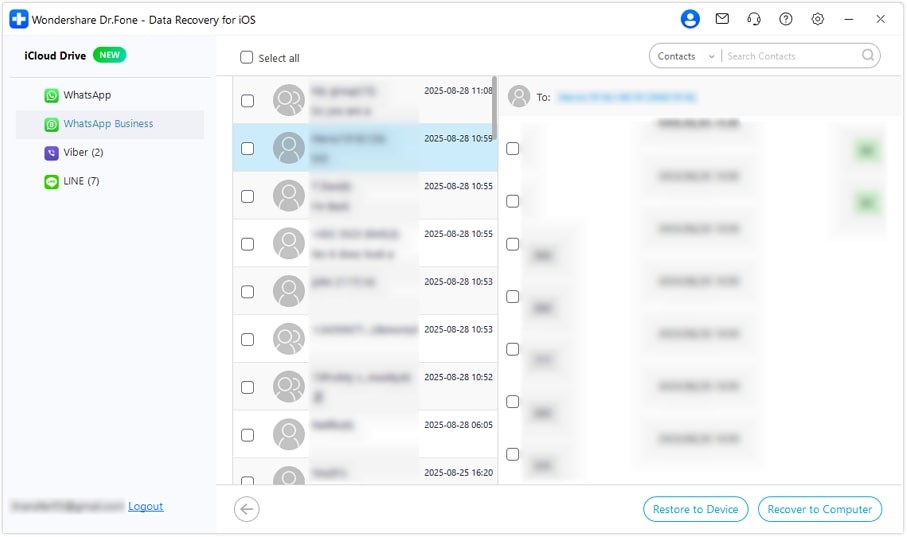
After scanning, review the recoverable WhatsApp messages, group chats, photos, videos, voice notes, documents, links, and attachments. Previewing the results helps users confirm whether the missing data is available before recovery
Step 6: Select and recover only the needed files.
Choose the specific WhatsApp conversations or media files to recover. This selective recovery method helps users restore only what they need without replacing all current iPhone data through a full-device restore.
Part 4. Recovering App Data from iCloud, iTunes, or the Device Itself
Recovery software can offer around 3 options for retrieving lost data, including iTunes, iCloud, and the iOS device itself. Thus, the right software provides options to recover data from iTunes backups, iCloud-synced data, and iCloud Drive. A scan of the phone itself works best when no backup exists, while other methods pull specific chats from iCloud or local iTunes files.
Nevertheless, the choice of data depends on how the data disappeared and on whether a computer link is available. Direct device scans can find items the user never saved. While backup extraction keeps current phone data safe and old messages recoverable.
Part 5. How to Avoid Overwriting Recoverable Social App Data
While knowing how to get back deleted WhatsApp messages on an iPhone with the right option, the following tips can help make this process simple and easier:
- Halt Device Activity: New actions, such as messages or photo capture, overwrite the bits of the lost data still in storage. So, to improve the chances of recovery, keep the phone idle as soon as the loss is detected.
- Stop Background Tasks: Auto-downloads and cloud sync create new files that can erase the very chats needed for restoration. Thus, disabling background sync and disconnecting them from the web keeps the memory space clear and stable.
- Skip App Updates: A fresh install or an update can change how an app stores files and can wipe old database entries forever. Therefore, keep the current versions as it is until the recovery process finishes to avoid data loss.
- Build a Full Backup: Always work on a copy of the data, not the live phone, to prevent a permanent mistake. This backup ensures that multiple recovery attempts can be made without risking the original files.
- Avoid Cleaner Tools: Optimization apps clear cache and free up storage, which can overwrite recoverable data and reduce success rates. These tools often target storage areas where deleted social media data may still exist.
Conclusion
Protecting social app data is vital for maintaining personal memories and professional ties. Thus, when chats or other data vanish, acting right away and using the right tools, such as Dr.Fone data recovery software, may help. So, choose the solution that supports data retrieval of lost information and a fully restored account.